Exploring the Dynamic Universe
The universe is a dynamic and unpredictable place filled with explosive and cataclysmic events. The NRT project will enable rapid observations of transient phenomena like Gamma Ray Bursts (GRBs), which fade within minutes.
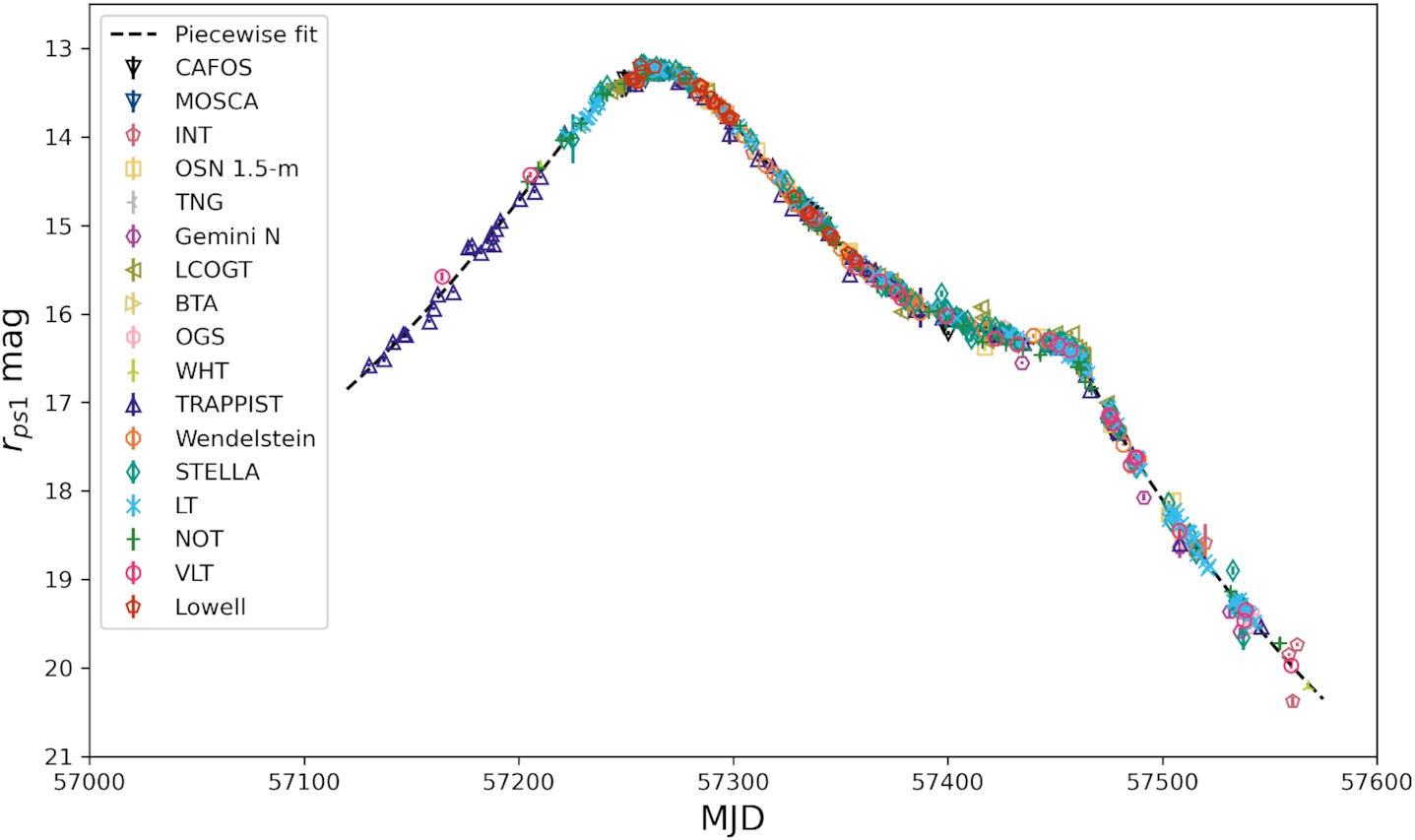
Supernovae (SNe) are pivotal events in stellar evolution; their catastrophic nature makes them powerful probes of the evolution and life cycle of different types of star.
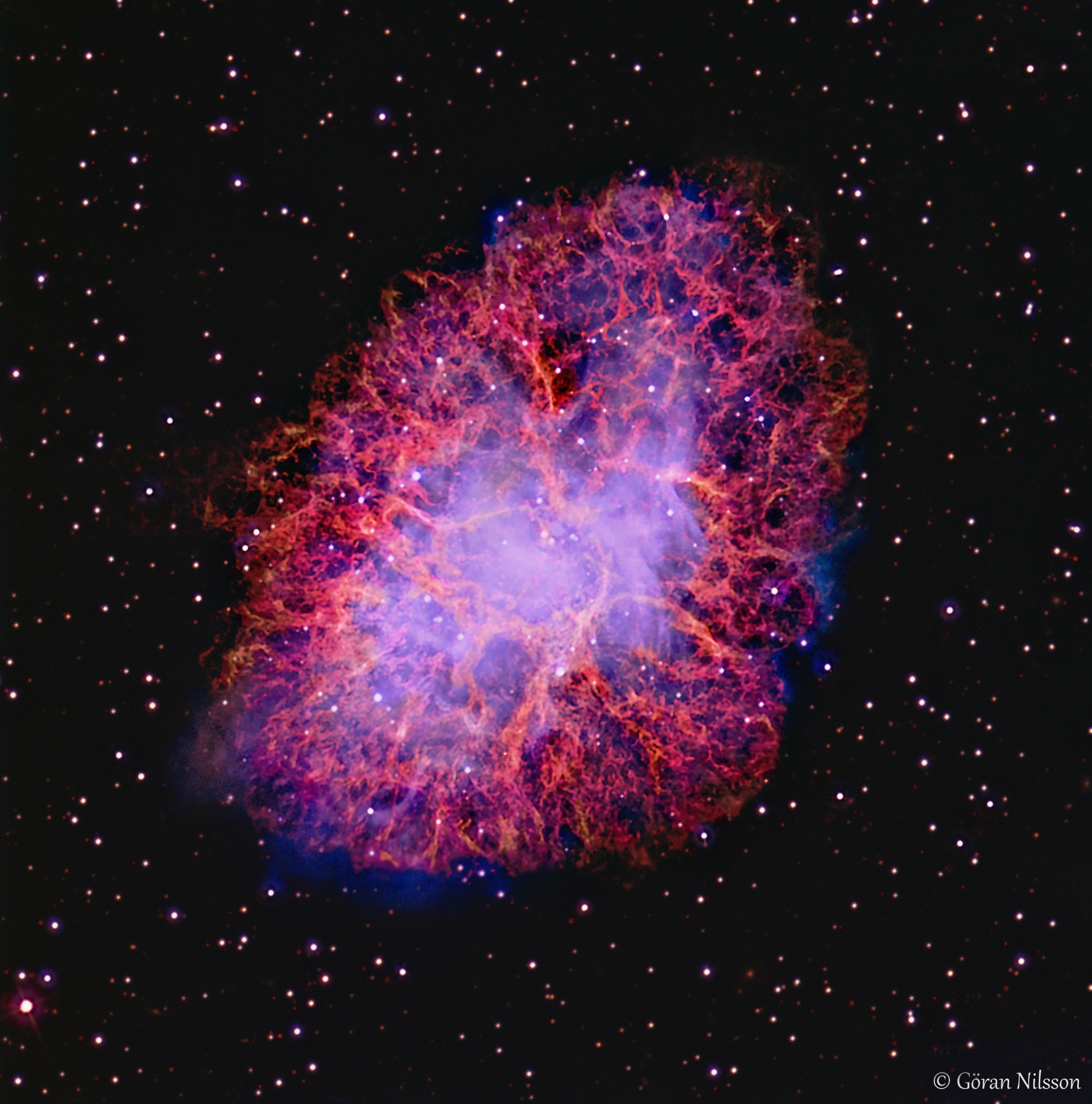
The Liverpool Telescope’s autonomous follow-up has been key for gamma-ray burst science. For the NRT, we aim to be on target and taking observations within 30 seconds of a trigger.

Rapid IR imaging or spectroscopy is necessary to estimate the redshift, alongside fast polarimetry using MOPTOP (transferred to NRT) to characterise the magnetic fields.
With LSST and other surveys, the NRT will classify ~10,000 objects per year. Key areas include Novae, which are viable pathways to Type Ia SNe.
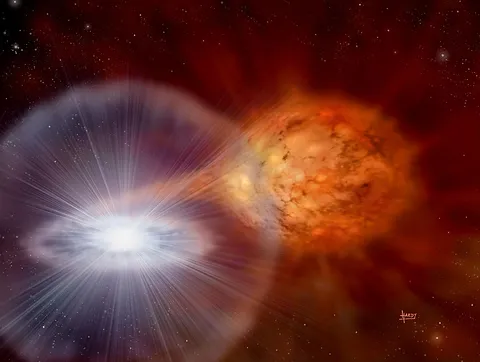
Follow-up of Gravitational Waves (LIGO/Virgo) and Neutrino events. The NRT will complement GOTO on La Palma to provide spectroscopic classification of counterparts.
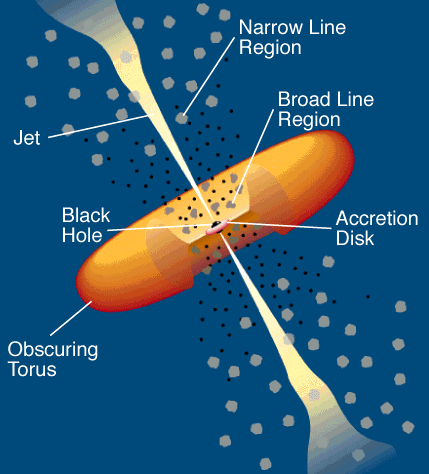
Active Galactic Nuclei (AGN) and Blazars. Studies include disk reverberation mapping and polarimetric monitoring of blazars.
Tidal Disruption Events (TDEs) require rapid spectroscopic characterisation, a perfect task for NRT's SPRAT-type spectrograph.
From comets and asteroids (NEOs) to exoplanet transit monitoring (TESS/PLATO follow-up). The NRT's non-sidereal tracking capability is essential for Solar System objects.